
The phrase “to come full circle” is an idiom that refers to something — whether a person, place or thing — ending up in the same place it started.
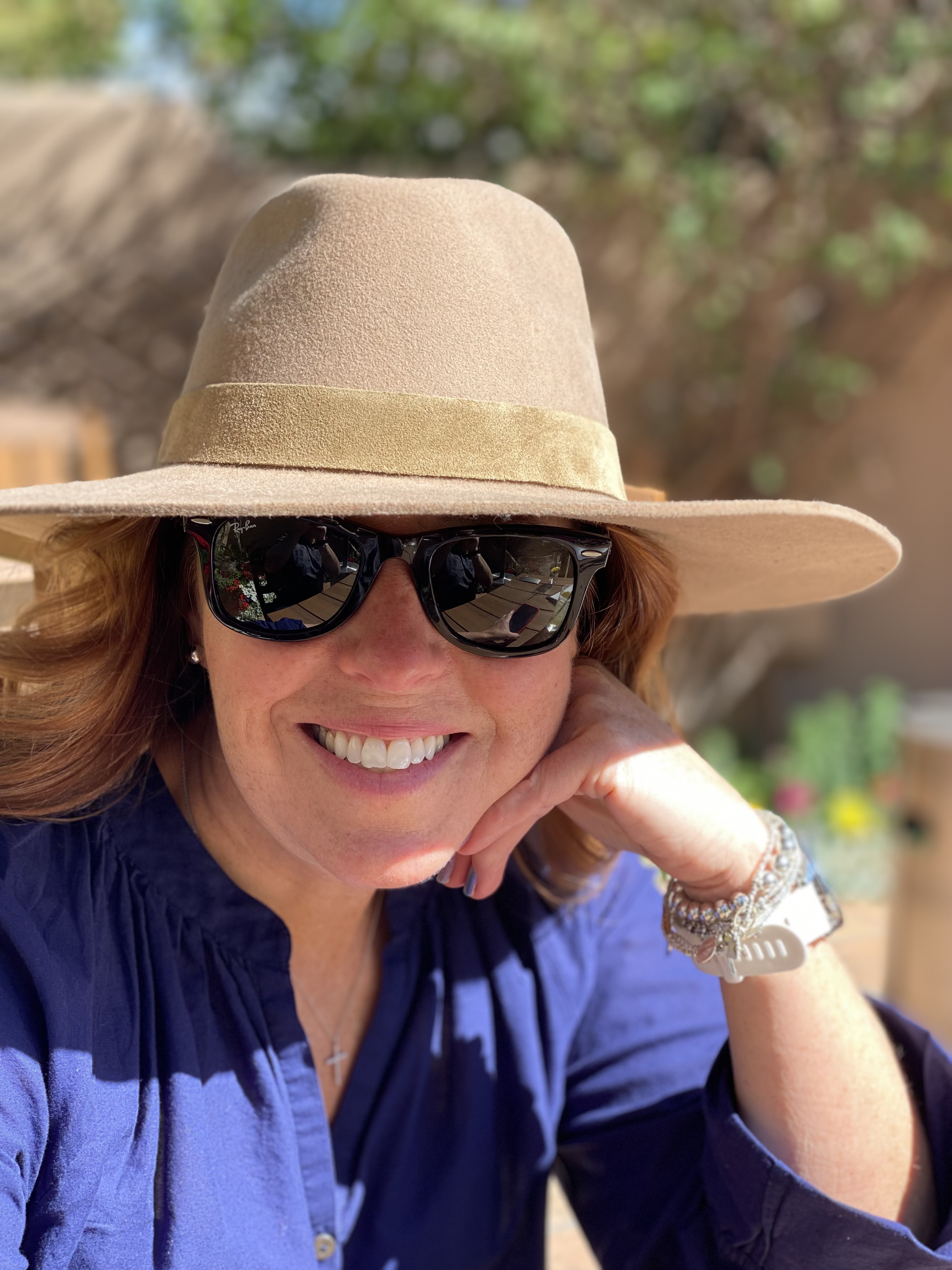
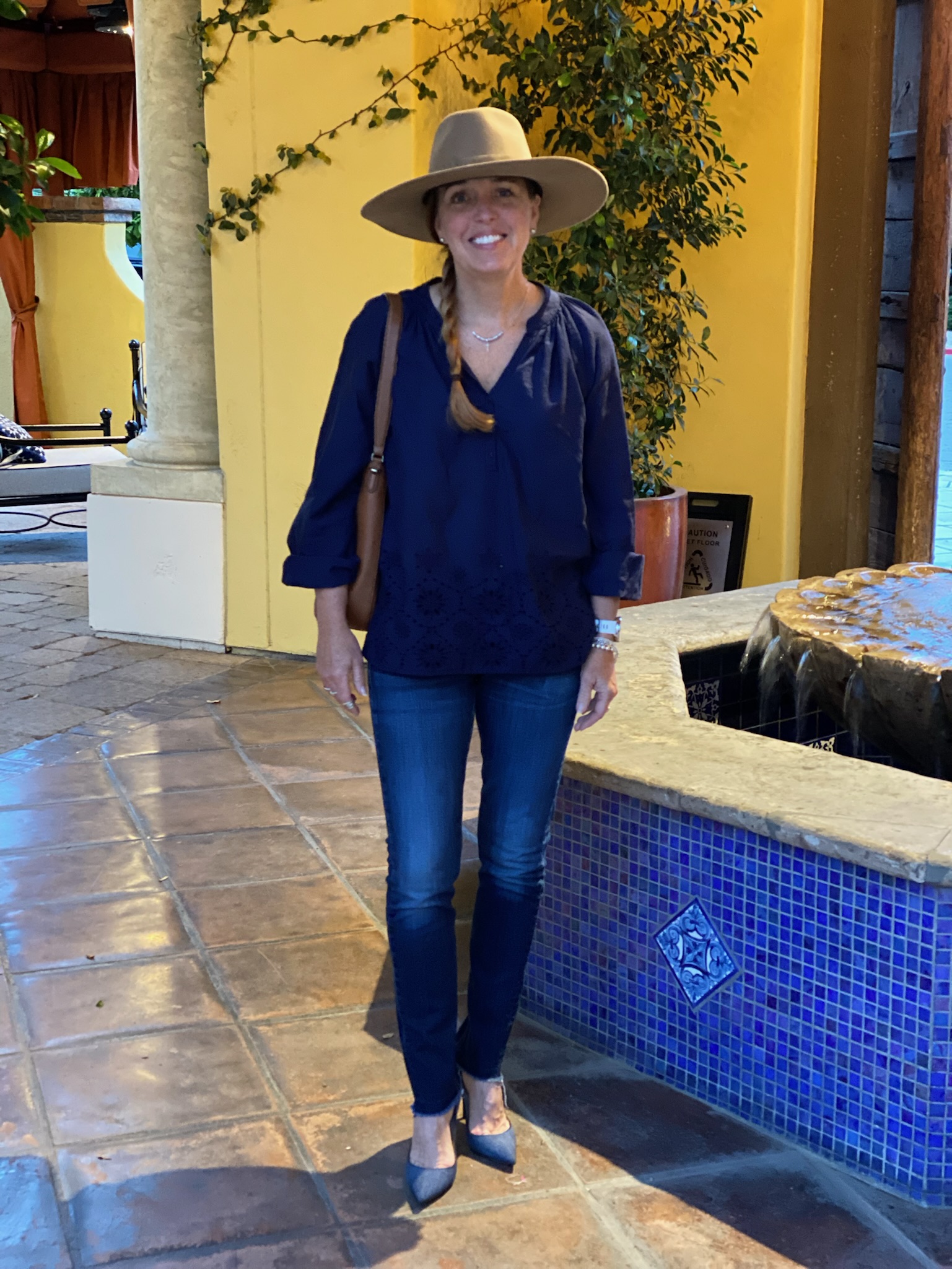
Starting point: Hermosa Inn, 2018.

Let’s begin!
I love hats.
I love art.
If I could…
I would wear a hat everyday!
Also, if I could…
I would be a prolific painter.
I would be lying if I said I have not, in my youth, imagined myself as a chapeau wearing artist painting her days away merrily.
Unfortunately, there are often times a hat is not appropriate to be worn; as well as, I am an extremely amateur painter, (at best.) I dabble, but my dabbles are always evidence that my talents most likely peaked when I was in kindergarten, with not a lot of improvement since.
Nonetheless, I still hold these 2 loves in high-esteem!
Can you imagine my excitement if these two worlds collided?
Well imagine no more because they have!
I discovered this collision not long ago at one of my all-time favorite locations: the Hermosa Inn.
Let me tell you a little about all three.
First, the hat…
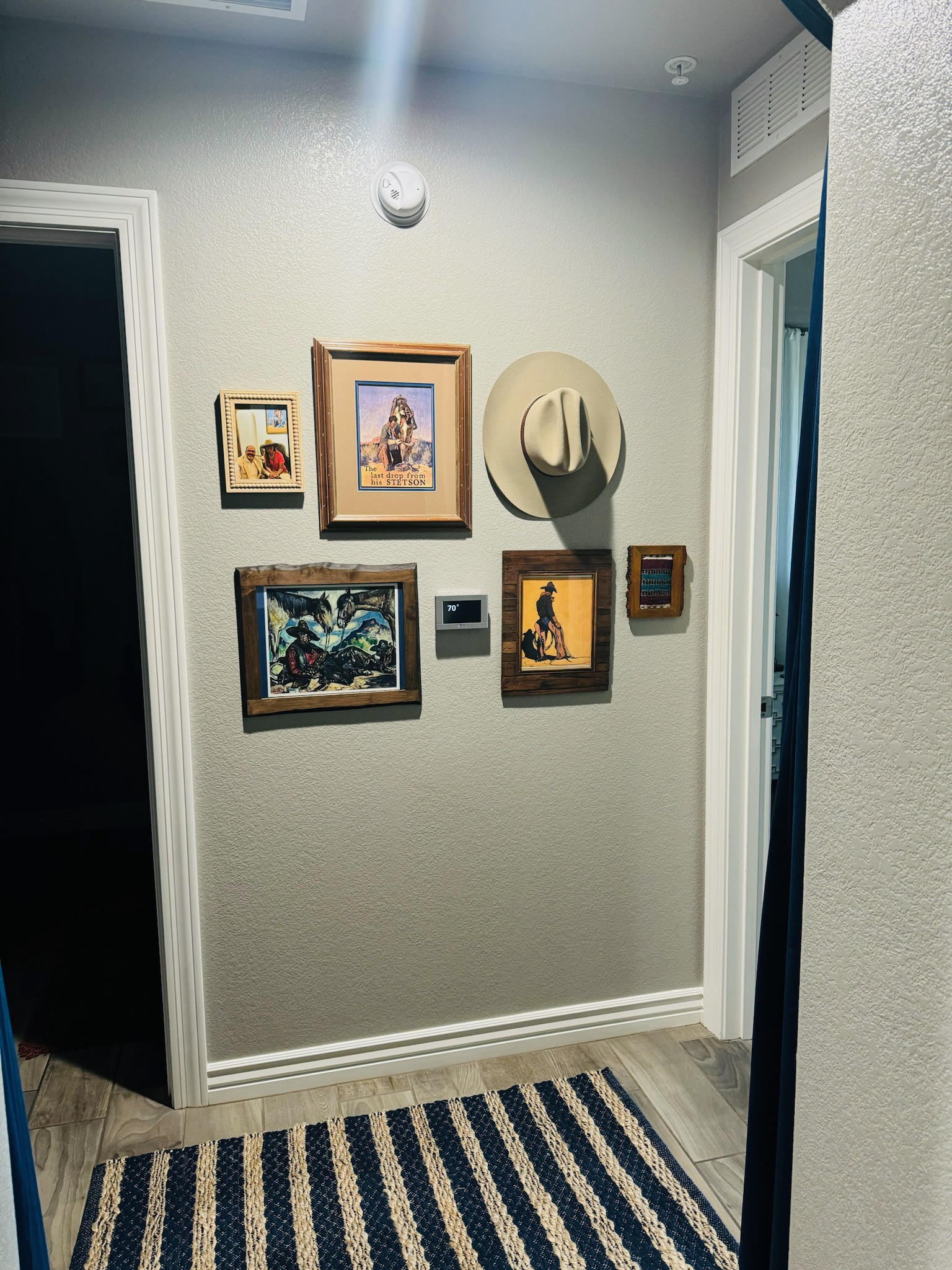
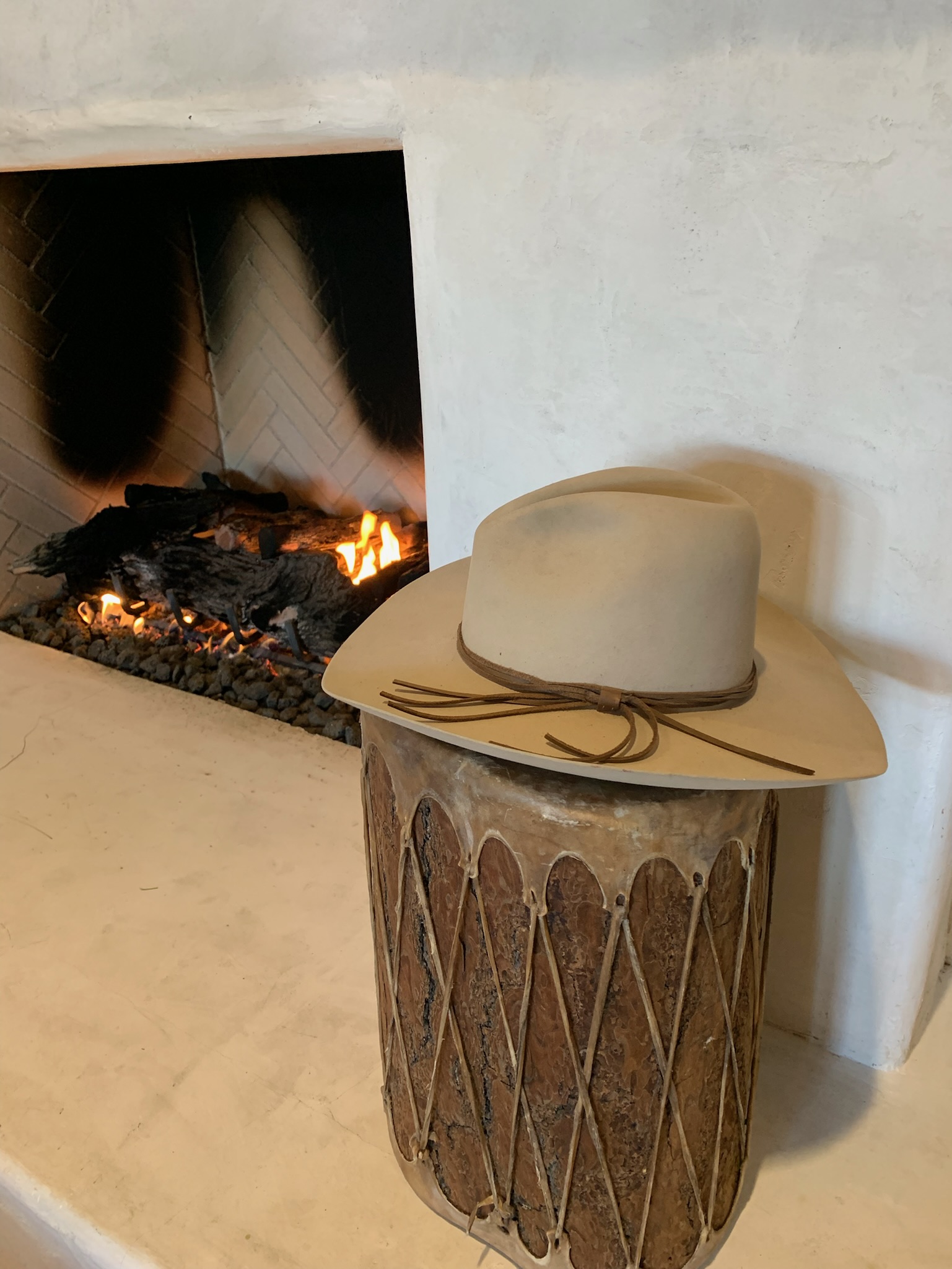
I found her at a favorite shop in Arizona – the Heritage Hat Company. She was hanging on the back wall but I could hear her calling my name as soon as I crossed the threshold of the door.
We’ve been bffs ever since.
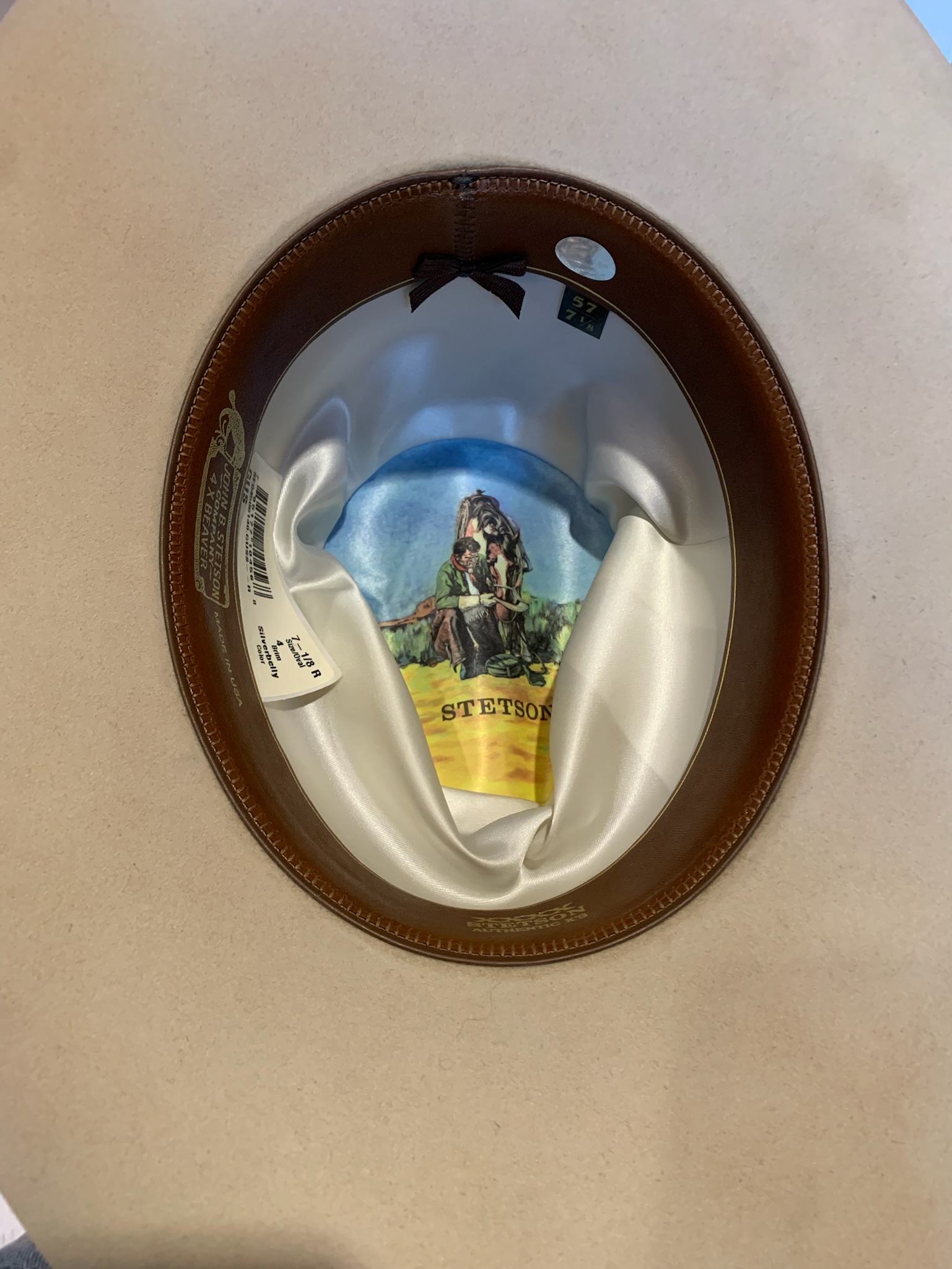
She’s a Stetson, which for those of you who may not be familiar – Stetson is a name for the wide variety of hats made by the John B. Stetson Company. The company was founded by one John B. Stetson, son of Stephen Stetson, a hatter. John was born in 1830 in Orange, New Jersey and he worked in his father’s hatter shop until he was diagnosed with tuberculosis in 1854 and told that he did not have long to live (tuberculosis was then a disease that was hard to cure). On his doctor’s advice he went West in hopes he would get better. After some time, he settled in a trading post of St. Joseph, Missouri from where were sent expeditions to Pike’s Peak and similar destinations. During the travel he noticed that symptoms of his illness slowly disappeared. As his health improved, in 1865 Stetson returned to the east and with $100 for tools he opened a small hat making business in Philadelphia, Pennsylvania. In the beginning, he made hats that were copies of the modern hats at the time. But then he decided to use the experiences from his western traveling and designed a hat called “Boss of the Plains”. It was a hat with a four inch flat brim, straight sides, rounded corners and symmetrical on all sides without creases. It had a sweat band inside of the hat and a hatband that helped adjust the size, so the hat could stand firmly on the head. The hat was durable, waterproof and lightweight and despite its high cost it became very popular among cowboys because of those qualities. Soon Stetson started mass production of his hats and his company lasts to this day!
Next, the artist…
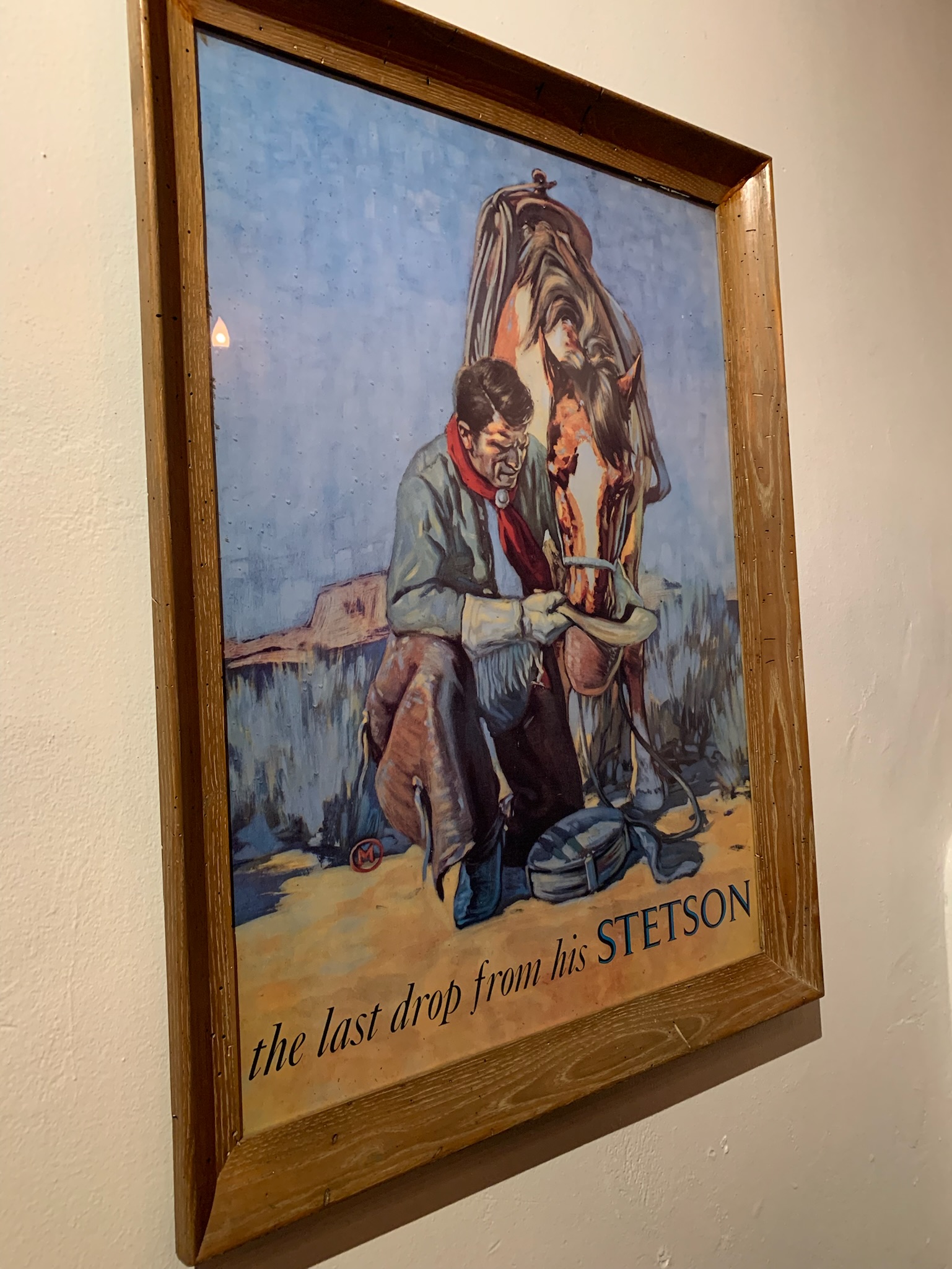
Lon Megargee saw the life he wanted in the dime novels he read as a boy. He was the first and remains one of the best-known of Arizona’s cowboy artists. His paintings introduced the state’s spectacular landscape and its native people to a wide audience, helping forge the image of Arizona that exists today. In that sense, he truly was a frontiersman. As some contemporaries commented, he wielded his “paintbrush like a pistol.” We can only imagine how much that description pleased the virile, swaggering Megargee, born in Philadelphia in 1883.
After attending one of Buffalo Bill Cody’s Wild West shows, Megargee made up his mind to become a cowboy. At 13 he moved to Arizona and by the time he was 24 he was foreman of a ranch north of Phoenix. He rode dangerous range alone, a sidearm always bouncing on his hip. Megargee went bankrupt amid a bad drought, later calling it his luckiest break. “If I had prospered as a rancher,” he said, “chances are I’d still be doing it, and would never have put paint to canvas.” Actually, what Megargee put on canvas were his dreams, a peculiar blend of real-life cowboy experience and his boyhood imaginings.
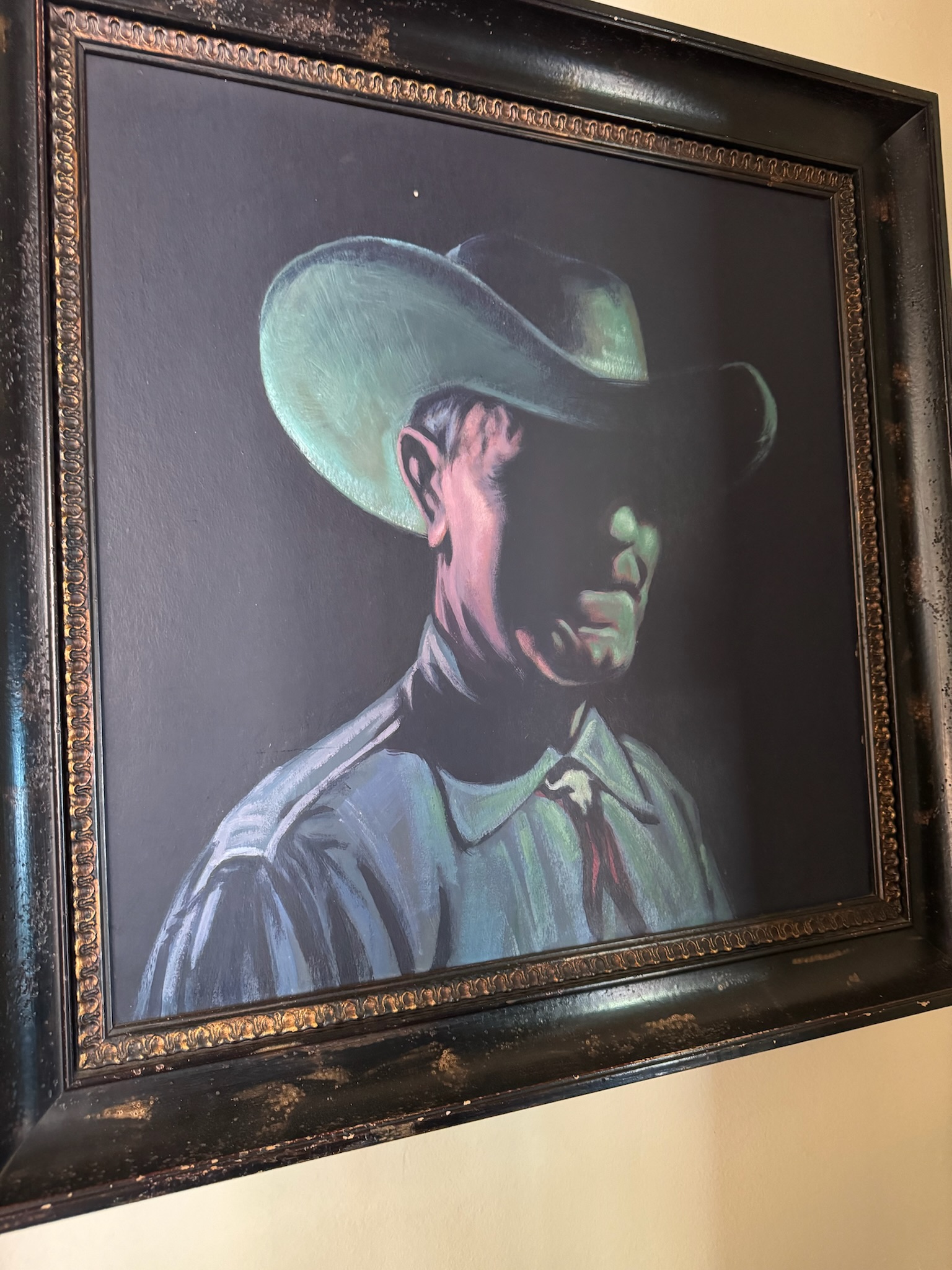
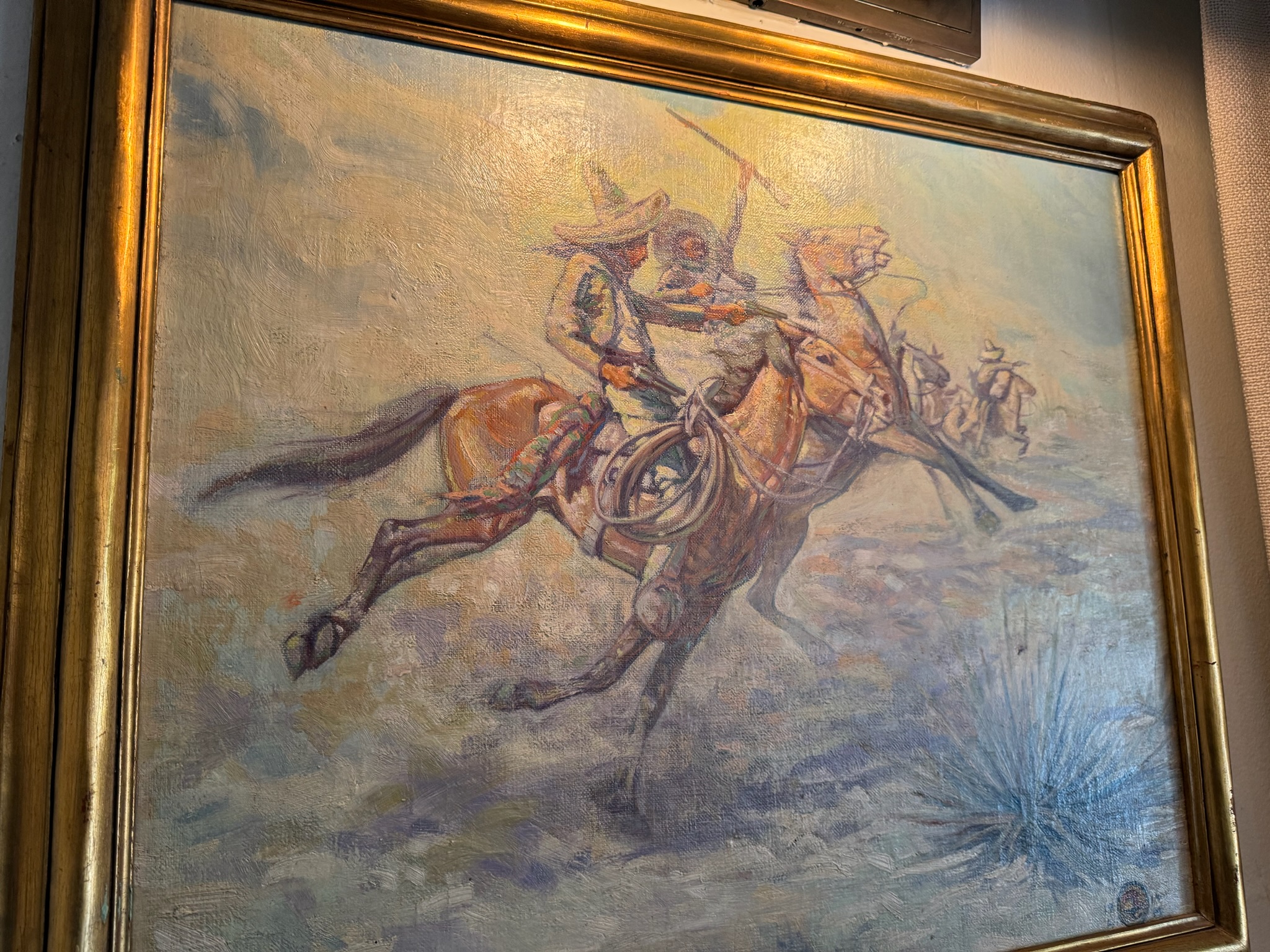
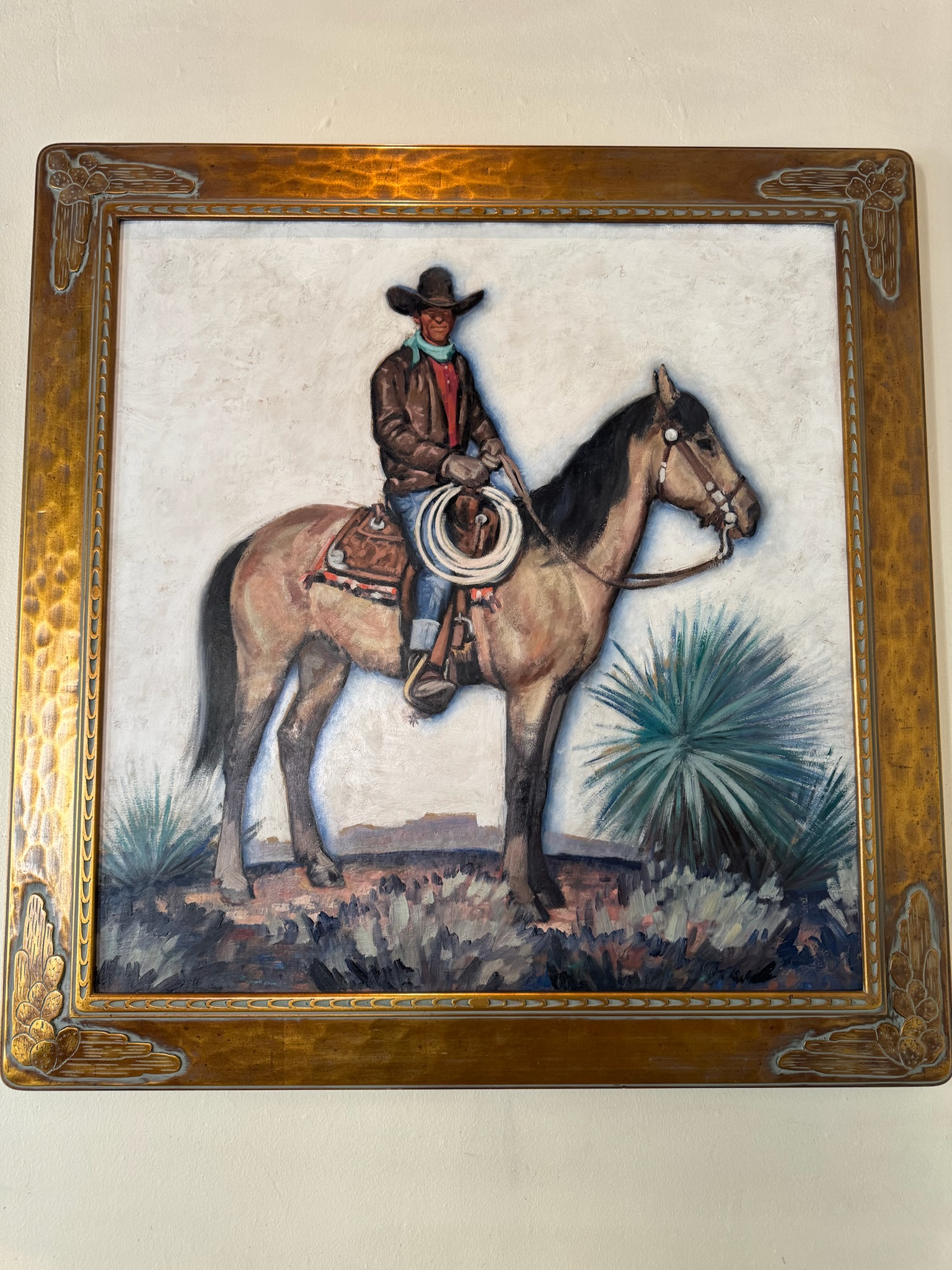

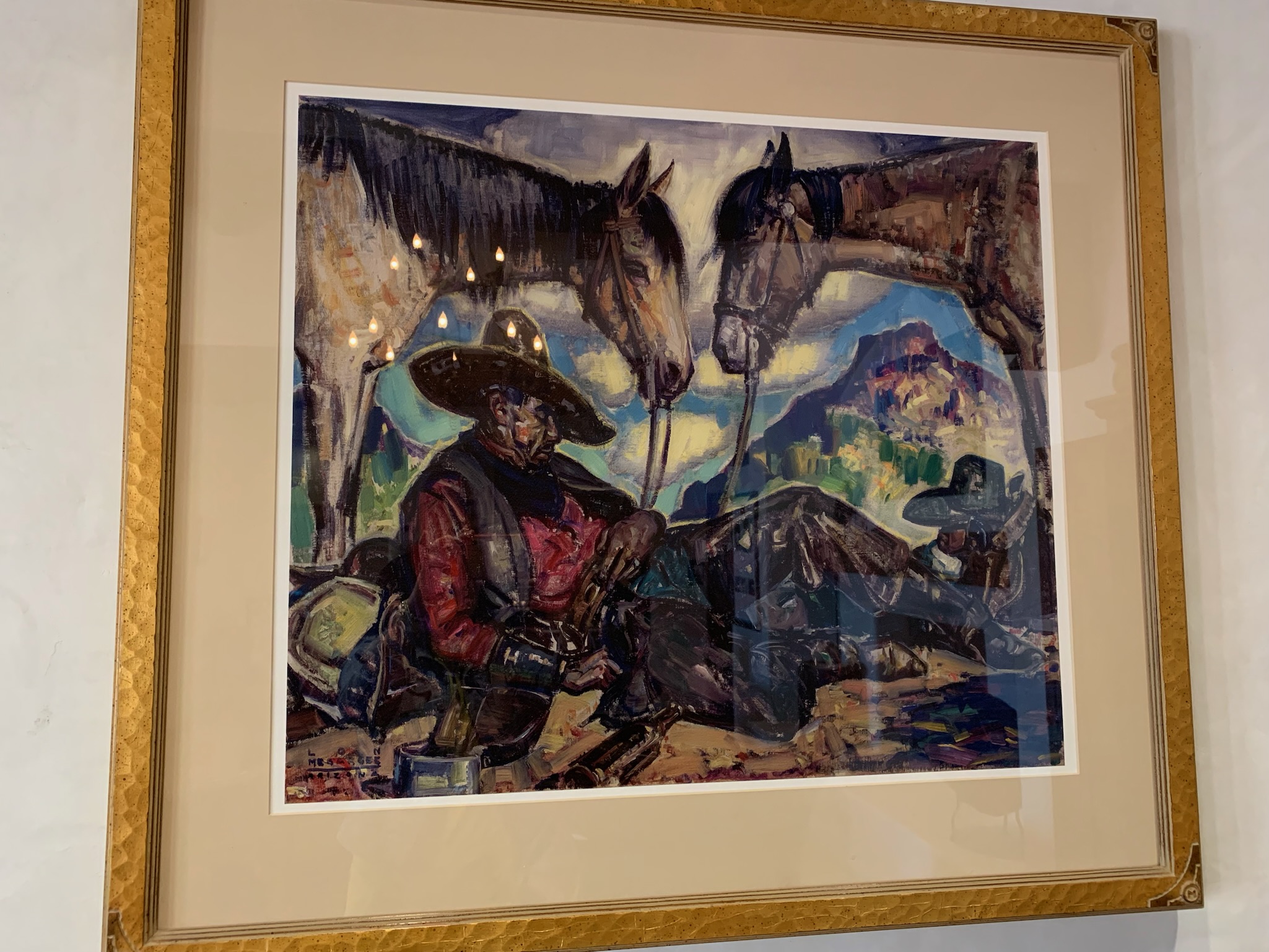
101 years ago (2023) Arizona artist, Lon Megargee, was commissioned to create a piece of art to be manufactured inside the now famous Stetson hat. Every great artist desires to leave something behind that will grant him and his works immortality. Megargee’s “The Last Drop From His Stetson” is forever identified with Stetson hats and the image still graces the inside liners of many of the hat company’s finest hats.
Lastly, the place…
Over the course of Megargee’s career he also designed about a dozen houses. His method of designing was spontaneous and instinctive, working without blueprints and aided only by a few sketches. He emerged as a talented architect ahead of his time in his interest in working in regional modes, now popular as the” Santa Fe Style.” The most famous structure associated with Megargee was the Casa Hermosa (now the Hermosa Inn), which was erected on Stanford Drive (now 5532 North Palm Cristi Road). Constructed of adobe blocks made on site, it had been inspired by regional architectures seen on his travels throughout New Mexico, Mexico and Spain. He described it as a house that “was the embodiment of masculinity. Not a feminine frill in it.” Hollywood cowboys, the likes of John Wayne were familiar guests and during the Depression the artist ran it as a guest ranch. Today it remains as one of Paradise Valley’s most historic boutique hideaways.
A place (for me) where the things I’d imagined did collide!
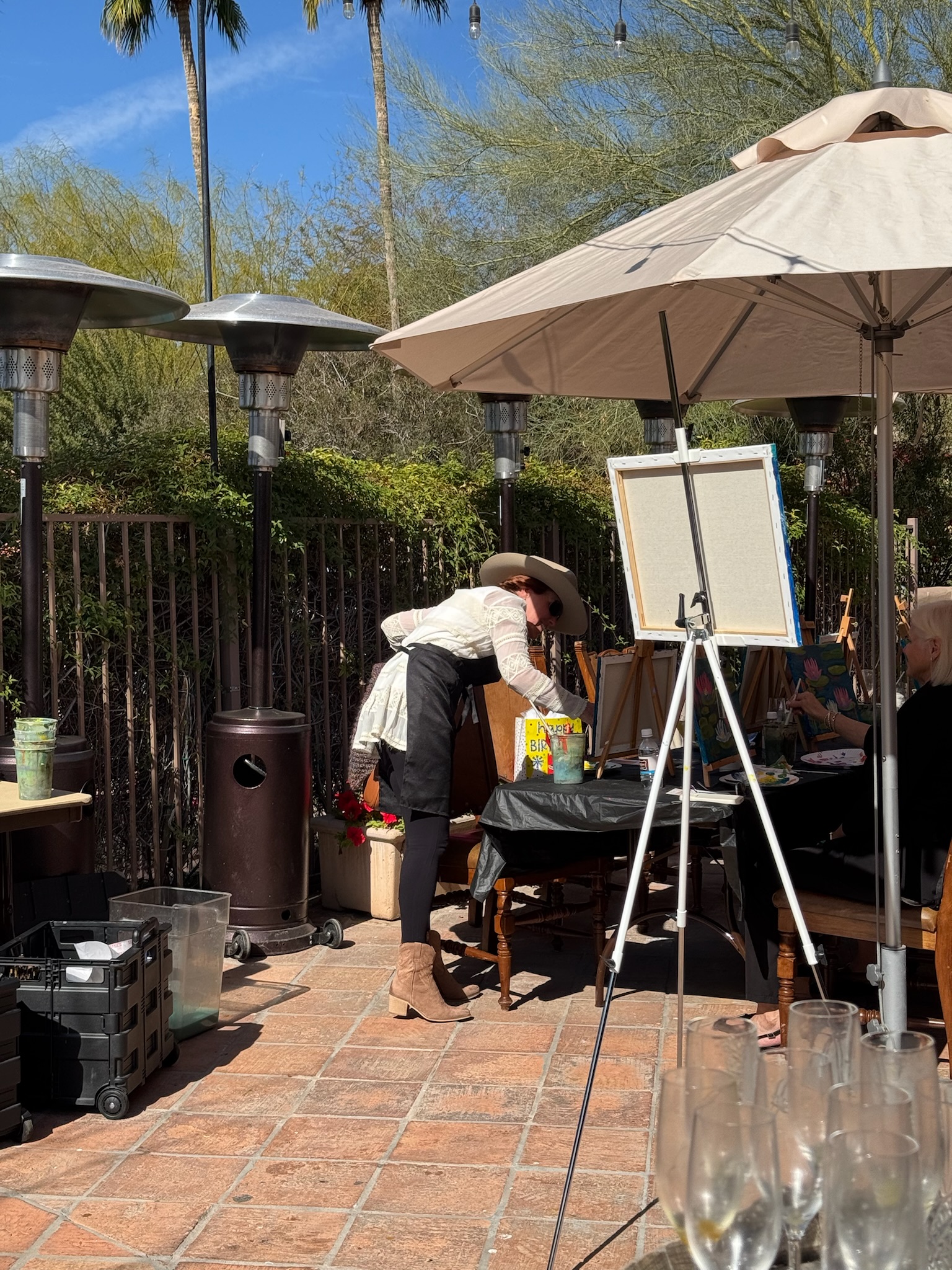
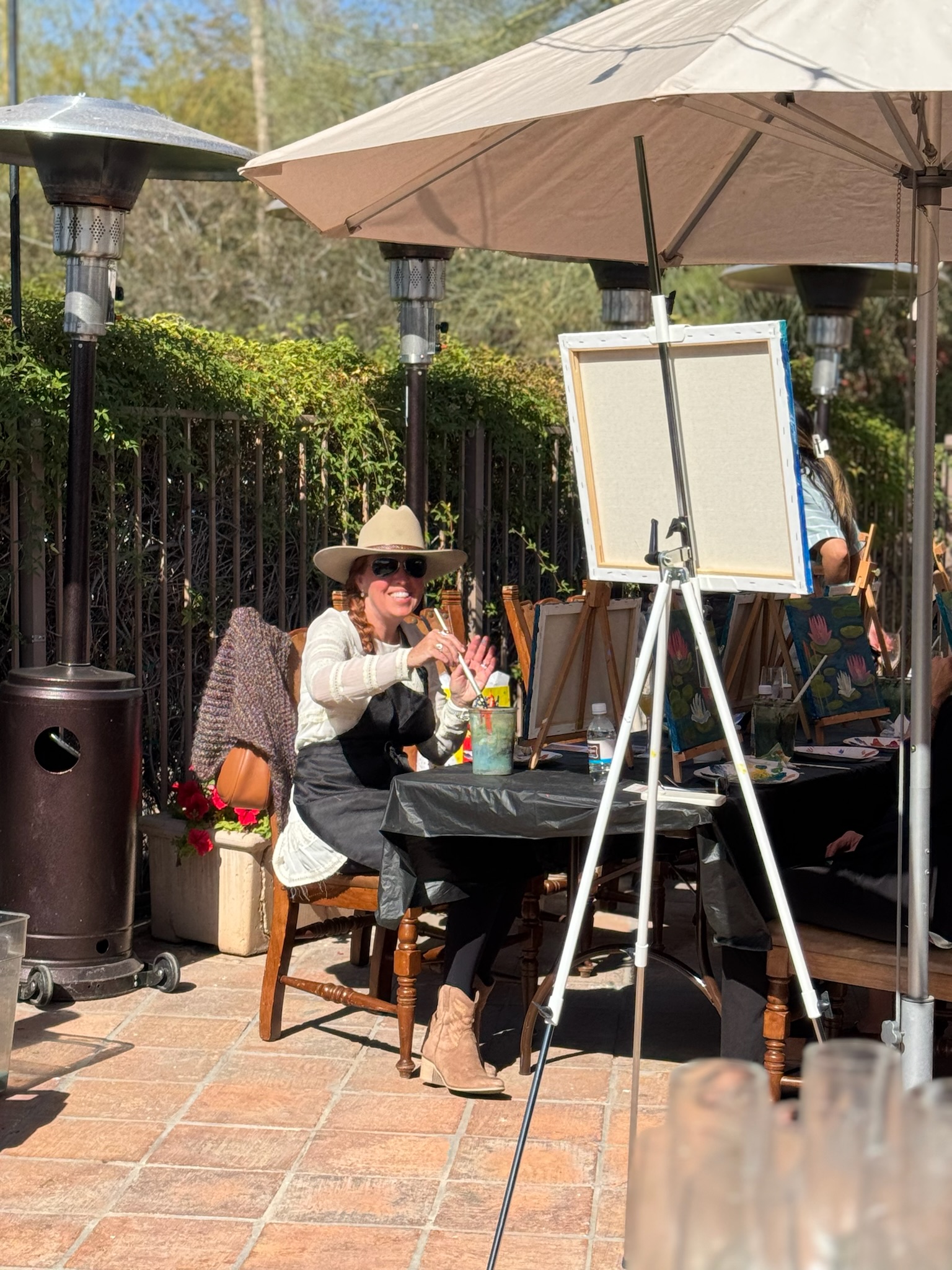
Full Circle: Hermosa Inn, 2025!
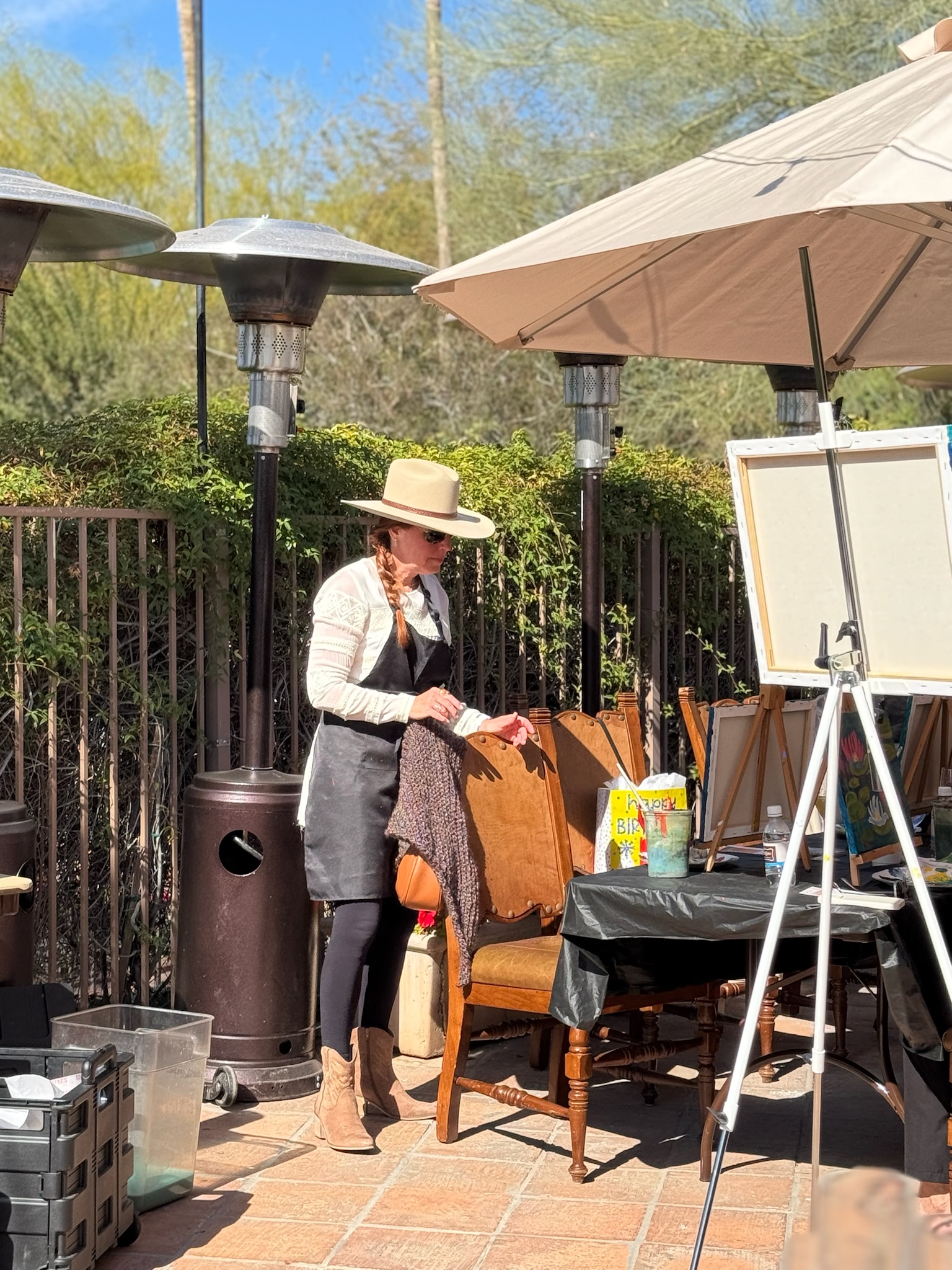

hugs n’ blessings for the full circle moments we dare to recognize!
 hugsnblessings
You’re such a sweetheart.
I love your Stetsin and I love your painting. I love seeing lovely you! What a beautiful story of two icons of the west. Thank you!
Happy Mother’s Day!
LikeLike
Thank you dear sister for sharing this beautiful and interesting post. Blessings
LikeLike
you are one of those people that can bring class to wearing a hat!
LikeLike