Do you remember?

A wise Irishman.
An Irishman.

A wise Irish Man once asked us: “Do you remember, the 21st of September?”

“Yes, we do!”

And there have been indelible marks left behind as the clock changes to 22 September.

 Like wine stains on your favorite table-covering that can never be removed, some memories remain forever.

There will be several 21st(s) of September I will always remember.

I will definately add this years’ to the list (along with the others!)

Yesterday Pope Francis delivered one such indelible moment as I listened to the live coverage of his homily message to the thousands gathered in Revolutionary Plaza in Cuba.

I pray a word or two leave an indelible mark on your heart as well.

PopeFrancis2015
An Argentinian.

Pope Francis told the crowds on 21 September 15:

On a day like any other, as Matthew, the tax collector, was seated at his table, Jesus passed by, saw him, came up to him and said: “Follow me”. Matthew got up and followed him.

Jesus looked at him. How strong was the love in that look of Jesus, which moved Matthew to do what he did! What power must have been in his eyes to make Matthew get up from his table! We know that Matthew was a publican: he collected taxes from the Jews to give to the Romans. Publicans were looked down upon and considered sinners; as such, they lived apart and were despised by others. One could hardly eat, speak or pray with the likes of these. For the people, they were traitors: they extorted from their own to give to others. Publicans belonged to this social class.

Jesus, on the other hand, stopped; he did not quickly take his distance. He looked at Matthew calmly, peacefully. He looked at him with eyes of mercy; he looked at him as no one had ever looked at him before. And this look unlocked Matthew’s heart; it set him free, it healed him, it gave him hope, a new life, as it did to Zacchaeus, to Bartimaeus, to Mary Magdalene, to Peter, and to each of us. Even if we do not dare raise our eyes to the Lord, he looks at us first. This is our story, and it is like that of so many others. Each of us can say: “I, too, am a sinner, whom Jesus has looked upon”. I ask you, in your homes or in the Church, to be still for a moment and to recall with gratitude and happiness those situations, that moment, when the merciful gaze of God was felt in our lives.

Jesus’ love goes before us, his look anticipates our needs. He can see beyond appearances, beyond sin, beyond failures and unworthiness. He sees beyond our rank in society. He sees beyond this, to our dignity as sons and daughters, a dignity at times sullied by sin, but one which endures in the depth of our soul. He came precisely to seek out all those who feel unworthy of God, unworthy of others. Let us allow Jesus to look at us. Let us allow his gaze to run over our streets. Let us allow that look to become our joy, our hope.

After the Lord looked upon him with mercy, he said to Matthew: “Follow me.” Matthew got up and followed him. After the look, a word. After love, the mission. Matthew is no longer the same; he is changed inside. The encounter with Jesus and his loving mercy has transformed him. He leaves behind his table, his money, his exclusion. Before, he had sat waiting to collect his taxes, to take from others; now, with Jesus he must get up and give, give himself to others. Jesus looks at him and Matthew encounters the joy of service. For Matthew and for all who have felt the gaze of Jesus, other people are no longer to be “lived off”, used and abused. The gaze of Jesus gives rise to missionary activity, service, self-giving. Jesus’ love heals our short-sightedness and pushes us to look beyond, not to be satisfied with appearances or with what is politically correct.”

Jesus looks at Matthew with Love and Mercy. Everyone wants to be noticed. Children are forever saying to their parents ‘Look at me, Look at me.” One of the most painful crosses are those who feel invisible. No one seems to notice or look at them.

Jesus looks at us. Jesus looks into our eyes. In the Gospel today, Jesus stops and looks at a man who everyone considered an outcast. Jesus simply looks at him with Love, and Matthew followed him.

Jesus is looking at you today with eyes full of love and mercy.

And so I ask: “Will you remember?”

these hugs n’ blessings are for that holy moment when you realize God is looking at you.
(Part Two) The DM Trifecta!

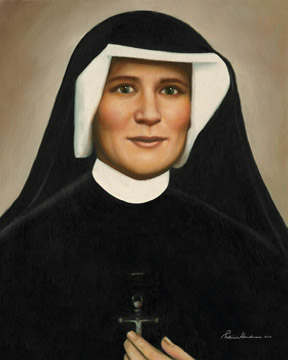
FaustinaP_unframed

“O My God

When I look into the future, I am frightened, But why plunge into the future?
Only the present moment is precious to me, As the future may never enter my soul at all.

It is no longer in my power,
To change, correct or add to the past;
For neither sages nor prophets could do that.
And so, what the past has embraced I must entrust to God.

O present moment, you belong to me, whole and entire, I desire to use you as best I can.
And although I am weak and small,
You grant me the grace of Your omnipotence.

And so, trusting in Your mercy,
I walk through life like a little child, Offering You each day this heart Burning with love for Your greater glory.” (2) Diary, Divine Mercy of My Soul, St. Faustina Kowalska

As I wrote last week, in (Part One) The DM Trifecta, The Divine Mercy Chaplet was dictated to St. Faustina by the Lord Jesus Himself in Vilnius on September 13-14, 1935, as a prayer of atonement and for the appeasement of God‟s wrath (see Diary, 474-476).

Those who recite this Chaplet offer to god the Father “the Body and Blood, Soul and Divinity,” of Jesus Christ in atonement for their sins, the sins of their loved ones, and those of the entire world. By uniting themselves with the sacrifice of Jesus, they appeal to the great love that our Heavenly Father has for His Son and, in Him, for all humanity.

By means of this prayer, the petitioners request “mercy on us and on the whole world,” and by so doing, they perform a work of mercy. If the faithful add to this the foundation of trust and fulfill the conditions regarding every good prayer (humility, perseverance, matters in conformity with God’s will), they can expect the fulfillment of Christ’s promises which are particularly related to the hour of death: the grace of conversion and a peaceful death.  Not only will the people who say the Chaplet receive these graces, but also the dying at whose side others will recite this prayer.

For the Second Part of The DM Trifecta we will focus on: The Great Hour of Mercy.

divmer2

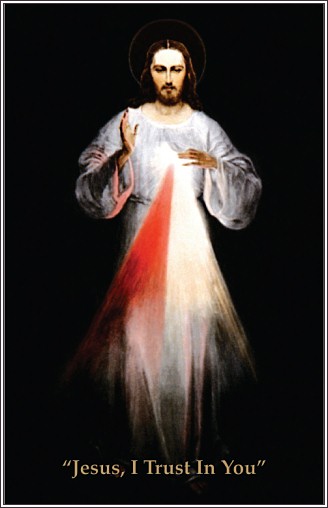
“My daughter, be diligent in writing down every sentence I tell you concerning My mercy, because this is meant for a great number of souls who will profit from it.”  (Diary 1142)

Just as the Image can serve as a reminder of the ocean of Divine Mercy, as well as its price, so can the daily remembrance of the Divine Mercy at the hour of Christ’s death. Jesus asked Saint Faustina, and through her us, to celebrate this Hour of Great Mercy, promising tremendous graces to those who would, both for themselves and on behalf of others.

In October, 1937, in Cracow, under circumstances that are not fully described by [St.] Faustina, the Lord Jesus recommended that she honor the hour of His death: “….as often as you hear the clock strike the third hour, immerse yourself completely in My mercy, adoring and glorifying it; invoke its omnipotence for the whole world, and particularly for poor sinners; for at that moment mercy was opened wide for every soul” (Diary, 1572).

The Lord Jesus also determined the prayers that are appropriate for this form of the Divine Mercy devotion: “….try your best to make the Stations of the Cross in this hour, provided that your duties permit it; and if you are not able to make the Stations of the Cross, then at least step into the chapel for a moment and adore, in the Blessed Sacrament, My Heart, which is full of mercy; and should you be unable to step into the chapel, immerse yourself in prayer there where you happen to be, if only for a very brief instant” (Diary, 1572).

In His revelations to St. Faustina, Our Lord asked for a special prayer and meditation on His Passion each afternoon at the three o’clock hour, the hour that recalls His death on the cross.

slp - faustina - jesus - cross

At three o’clock, implore My mercy, especially for sinners; and, if only for a brief moment, immerse yourself in My Passion, particularly in My abandonment at the moment of agony. This is the hour of great mercy. In this hour, I will refuse nothing to the soul that makes a request of Me in virtue of My Passion (Diary, 1320).

As often as you hear the clock strike the third hour, immerse yourself completely in My mercy, adoring and glorifying it; invoke its omnipotence for the whole world, and particularly for poor sinners; for at that moment mercy was opened wide for every soul. In this hour you can obtain everything for yourself and for others for the asking; it was the hour of grace for the whole world — mercy triumphed over justice. (1572)

From these detailed instructions, it’s clear that Our Lord wants us to turn our attention to His Passion at the three o’clock hour to whatever degree our duties allow, and He wants us to ask for His mercy.

In Genesis 18:16-32, Abraham begged God to reduce the conditions necessary for Him to be merciful to the people of Sodom and Gomorrah. Here, Christ Himself offers a reduction of conditions because of the varied demands of our life’s duties, and He begs us to ask, even in the smallest way, for His mercy, so that He will be able to pour His mercy upon us all.

We may not all be able to make the Stations or adore Him in the Blessed Sacrament, but we can all mentally pause for a “brief instant,” think of His total abandonment at the hour of agony, and say a short prayer such as “Jesus, Mercy,” or “Jesus, for the sake of Your Sorrowful Passion, have mercy on us and on the whole world.”

Pope John Paul with Jesus and Faustina

This meditation, however brief, on Christ’s Passion brings us face-to-face with the cross, and, as Pope John Paul II writes in Rich in Mercy, “It is in the cross that the revelation of merciful love attains its culmination” (8). God invites us, the Holy Father continues, “to have ‘mercy’ on His only Son, the crucified one” (8). Thus, our reflection on the Passion should lead to a type of love for Our Lord which is “not only an act of solidarity with the suffering Son of man, but also a kind of ‘mercy’ shown by each one of us to the Son of the Eternal Father.”

Three conditions for prayers offered in this hour should be:

1. They are to be addressed to Jesus.
2. They are to be said at three o’clock in the afternoon.
3. They are to appeal to the value and merits of Christ’s Passion.

At 3 O’Clock on Good Friday, Jesus died in incomprehensible agony on the wooden Cross which the Roman soldiers had nailed Him to. The soldier appointed to watch the bodies checked if the three whom they had crucified were still alive, but when he examined Jesus, he discovered Jesus had already died. So he did not break His legs, which was a Roman custom, thereby fulfilling the prophecy “Not one of his bones will be broken” (Psalm 34). Instead, he took a spear and pierced His sacred body, driving the iron blade into His Merciful Heart. As he withdrew the spear, there followed a gush of blood and water. The soldier was shocked and gave witness to St. John, the beloved disciple of Jesus, of this event. It is this moment which changed the world forever, and it is this prayer that commemorates that extraordinary moment.

The Passion of Jesus is the proof of His love for us. He underwent this horrifying ordeal so that He could forever stand between us and the uncompromising Justice of the Father and ask for mercy on our behalf. At the moment of our Judgement, we cannot defend ourselves and it is not possible for God the Father to be unjust. He must exercise justice and punish sin, as He ordained that the world should be created in this fashion.  Although it is Jesus who underwent this agony so that He could beg mercy for us, He was fulfilling the Will of His Father. It was God’s Will that there be a means by which He could grant us pardon and therefore prevent Him from rendering justice to sinners. It shows us the incomprehensible mystery of the mercy of God. For He created a way so that He could grant mercy to those who don’t deserve it; while it shows His Love and His desire that we spend all of eternity with Him in perfect peace, tranquillity and love. In many ways, God has set events up so that He could have an excuse to forgive us, for that is His true desire, the hallmark of His perfect love, His desire to forgive and forget, so that souls can be re-united with Him in love.

The short prayer which Jesus taught St. Faustina for the veneration of His Mercy at 3 O’Clock is, “O Blood and Water, which gushed forth from the Heart of Jesus as a Fount of Mercy for us, I trust in You”. This is also known as the Conversion Prayer. Jesus told St. Faustina, “I desire that you know more profoundly the love that burns in My Heart for souls, and you will understand this when you meditate upon My Passion. Call upon My mercy on behalf of sinners; I desire their salvation. When you say this prayer, with a contrite heart and with faith on behalf of some sinner, I will give him the grace of conversion. This is the prayer: “O Blood and Water, which gushed forth from the Heart of Jesus as a fount of Mercy for us, I trust in You.” (Diary 186-187)   St. Faustina also created her own prayer for this moment, which is: You expired, Jesus, but the source of life gushed forth for souls, and the ocean of mercy opened up for the whole world. O Fount of Life, unfathomable Divine Mercy, envelop the whole world and empty Yourself out upon us. (Diary 1319)

This holy hour is an exceptionally important element of the devotion to Divine Mercy. For if we do not take the time everyday to contemplate and understand the mercy of God and the sacrifice that Jesus made for mankind, how can we understand the purpose of the Chaplet, the Image, the Novena and particularly the Feast of Mercy? The Passion of Jesus teaches us what true mercy is. How can we grow in love of God if we don’t trust Him? And if we don’t understand the depth of His mercy, we may never truly trust Him and therefore never truly love Him. We will be forever standing afar from Jesus, fearful and distrusting.

But Jesus understands the reasons why we behave like this. We are viewing Him through our human experience where doubt, fear and an unwillingness to forgive, condition our everyday lives. We refuse to believe that God is as good, as merciful and as loving as He says He is and as He has proven He is. It is for this reason that the 3 O’Clock Holy hour is so important, for it is only through meditation on the Passion of Jesus that we, in our own way, will begin to understand how incomprehensible and infinite His mercy is and also believe that He has forgiven us. Only then can we believe in His Goodness and only then will we feel in our souls His love and mercy for each and every one of us, regardless of our past sins.

chaplet of divine mercy

The Lord Jesus promised:

“In this hour you can obtain everything for yourself and for others for the asking;

it was the hour of grace for the whole world – mercy triumphed over justice”

(Diary, 1572)

3 o’clock hugs n’ blessings to you, and to the whole world!

 you call me out…


You lead.
I follow.
You Speak.
I listen.

A Hand.
To Help me.
Reach beyond these Oceans…

Music by:  Hillsong

hugs n’ water soaked blessings!